
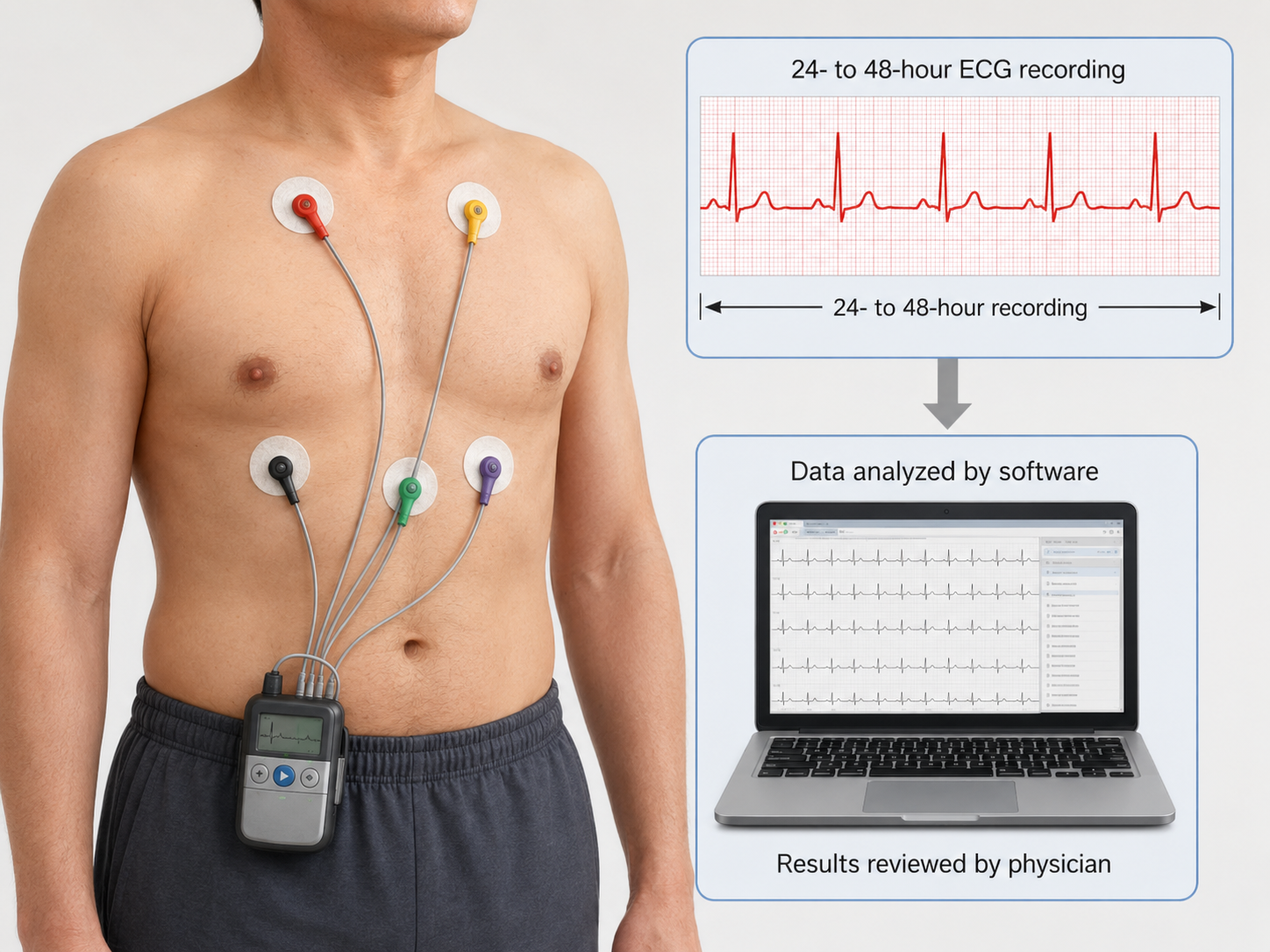
What is a Holter ECG?
A Holter ECG is a small, portable heart monitor that you wear while you get on with your normal day. A standard ECG in the rooms records only about ten seconds of your heartbeat, so a problem that comes and goes can easily be missed. The Holter records every heartbeat continuously, usually for twenty-four or forty-eight hours and sometimes for up to a week, through a few sticky patches on the chest connected to a device about the size of a cell phone.
Why is it done?
It is used when your symptoms may be caused by an intermittent rhythm disturbance: palpitations, a racing or skipping heartbeat, dizziness, near-fainting or unexplained tiredness. It also shows whether the heart rate is too slow, whether atrial fibrillation is present or how well it is controlled, whether extra beats are frequent, and whether medication or a pacemaker is doing its job. Because the recording is matched against the diary you keep, your cardiologist can see exactly what your heart was doing at the moment you felt unwell.
What happens on the day?
The patches and the monitor are fitted in the rooms in about fifteen minutes. The skin is cleaned and, if necessary, a little chest hair is trimmed so that the patches stay attached. You are then asked to carry on with your usual routine, including work and gentle exercise, and to write down the time and nature of any symptoms in a small diary. The monitor must be kept dry, so you cannot shower or bath while wearing it, and you should avoid electric blankets and strong magnets. You sleep with it in place. When the recording period is over you return the device to the rooms, or remove it yourself and bring it back with the diary.
What to expect afterwards
Once the patches are off you can shower normally and there are no restrictions at all. The recording contains hundreds of thousands of beats, so it is analysed by computer and then reviewed beat by beat by your cardiologist; the report is usually ready within a few days and is discussed at a follow-up appointment or by telephone. If nothing abnormal was captured because you had no symptoms during the recording, a longer monitor or an implantable loop recorder may be suggested.
Possible complications
The test is very safe, as the monitor only listens to your heart and puts nothing into your body. The usual complaints are minor: itching, redness or an occasional small rash under the sticky patches, and the inconvenience of not being able to shower. Some people find the device uncomfortable to sleep with for the first night. Tell the nurse if you have sensitive skin or a plaster allergy so that gentler patches can be used.
This information does not replace a consultation. Please discuss your own risks and options with your cardiologist.