
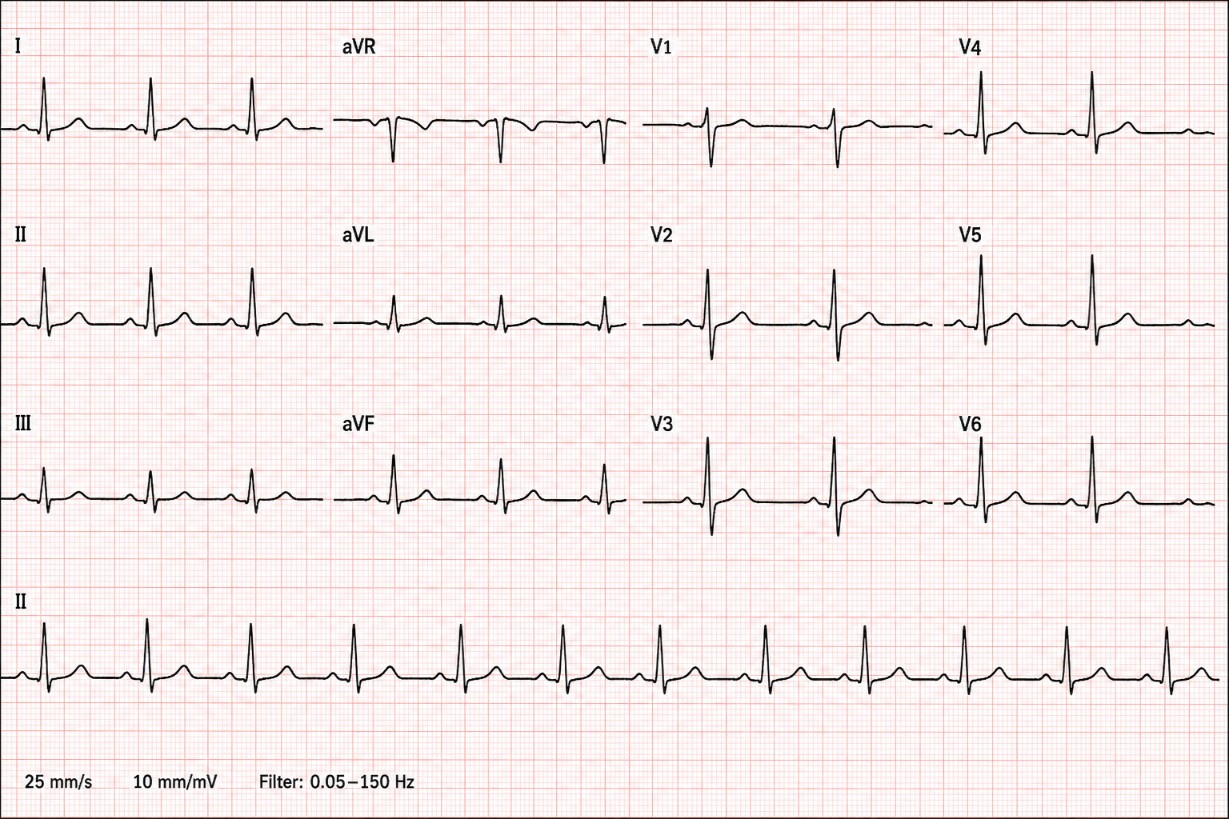
What is an electrocardiogram?
Every heartbeat starts as a small electrical signal that spreads through the heart muscle. An electrocardiogram, usually shortened to ECG, records those signals from the surface of your skin and prints them as a tracing on paper or a screen. It is completely painless, takes only a few minutes, and gives your doctor a great deal of information about your heart in one simple test.
Why is it done?
An ECG is one of the first tests done for chest pain, palpitations, breathlessness, dizziness or fainting. It can show whether your heart rhythm is normal or too fast, too slow or irregular, whether the heart muscle is under strain or thickened, whether a heart attack is happening now or has happened in the past, and whether the electrical wiring of the heart is delayed or blocked. It is also used to check the effect of certain medications and as a baseline before an operation.
What happens on the day?
No special preparation is needed and you may eat and take your usual medication. You will be asked to undress to the waist and lie on the bed; a gown or sheet is provided and privacy is respected. Ten small sticky patches, called electrodes, are placed on your chest, arms and legs, and clips are attached to them. Chest hair occasionally needs to be trimmed so that the patches stick. You lie still and breathe normally for about ten seconds while the recording is made. Nothing is passed into the body and you feel nothing at all. The patches are then removed and you can dress immediately.
What to expect afterwards
There is no recovery time; you may drive, eat and continue your day as normal straight away. Your cardiologist usually reviews the tracing immediately and will explain what it shows during your consultation. The ECG records only the moments during which it is running, so if your symptoms come and go, a normal ECG does not exclude a problem and a longer recording such as a Holter monitor, or another test, may be arranged.
Possible complications
An ECG is one of the safest tests in medicine. No electricity is put into your body; the machine only listens. The only discomfort most people notice is mild skin irritation, redness or a pulling sensation when the sticky patches are removed, which settles quickly. Rarely, someone with very sensitive skin develops a small rash where the electrodes were placed. Please tell the person doing the test if you have a skin condition or an allergy to plasters.
This information does not replace a consultation. Please discuss your own risks and options with your cardiologist.